We’re very excited to release the first issue of our new zine, PLAN A.
Download or view the print-compatible version here. The online-viewable version will be uploaded shortly!

Don't Wait Until 2025, Dow! Justice NOW!
Our Statement:
A few weeks ago, WISH was asked to endorse the following statement from the Bay Area Grand Jury Resistance Collective which aims to both oppose the existence of grand juries and to offer support to grand jury resisters. We had several great discussions about whether or not to do so, and in the end decided to sign on to the statement, but also wanted to offer a short statement of our own about why, despite endorsing, we have reservations about some of the language used in the statement.
WISH (Washington Incarceration Stops Here) seeks to support grand jury resisters, including those in our own communities, but also challenges the narrative that resistance as it is laid out in the Bay Area Grand Jury statement is the only way to fight back against the grand jury process.
WISH is a group opposed to prisons, criminalization, immigration enforcement, and other punishment-based approaches. Necessarily then, we also reject the validity and deeply question any purported usefulness of courts in solving problems those in our communities face. Grand juries in particular exist to tear communities and movements apart. WISH agrees that grand juries should be opposed when possible and that those resisting participation (and often facing incarceration by doing so) should be supported and celebrated. Spreading the word about what grand juries are and letting people know they can resist with support is vital to dismantling these harmful systems.
However, we also know that the state intentionally tries to get us to fight each other instead of fighting it. To say that anyone who talks to the FBI or a grand jury is untrustworthy ignores the realities of living in a police state. While some people bravely face incarceration as a result of grand jury resistance, many people cannot. Disabled people, trans people, people who care for children or others, immigrants, and anyone else who decides that they need to resist incarceration if at all possible are no less trustworthy. Incarceration is horrific, and we would never ask or expect anyone to be put in a cage for any reason—though we do seek to support those who are, especially activists from our own communities. To say that non-cooperation with the grand jury process is the most “ethical” choice ignores the histories of who is targeted by grand juries and why: we know that people of color led organizations have a long history of police infiltration and sabotage, and that grand jury investigations often target those who are already facing isolation and oppression. As we work together to develop ways to support grand jury resisters, we must remember to reach out and support those already marginalized.
Shaming people and isolating them further because of their decisions around survival does nothing to build our movements, is in opposition to our core beliefs, and ultimately plays into the state’s goals of dividing us from each other. It is with these ideas in mind that we chose to sign on to the statement by the Bay Area Grand Jury Resistance Collective while also pushing ourselves to develop strategies that reflect our strongest beliefs.
The Bay Area Grand Jury Resistance Collective‘s Statement:
August 2013.
Bay Area Grand Jury Resistance Collective:
The Bay Area Grand Jury Resistance Collective is a group of activists from the animal rights, environmental, anarchist, and anti-imperialist movements who collectively have decades of experience organizing against grand juries and other State repression. Recently we came together to discuss the increased use of grand juries as a tool by the State to disrupt and gather information on radical movements and the ways in which these communities have chosen to address them. We are writing this because we are aware that certain individuals have cooperated with a grand jury in San Francisco within the last year. These people have been neither transparent about their involvement nor what transpired during the grand jury proceedings. Their lack of accountability has the potential to weaken our ability to resist and to build our movements. We are further concerned that the affected communities have not been adequately prepared to address issues of transparency and accountability. This is a problem. A strong resistance to political repression is hinged on activists’ ability and commitment to foster a culture of solidarity, support, and accountability. It is vital to engage in discussions about what notions like “solidarity” and “accountability” will materially look like prior to them becoming necessary. This statement has been collectively written in the spirit of encouraging all those engaged in social and revolutionary change to have these conversations now, in preparation for the next grand juries.
Resist Grand Juries!
We offer this statement in solidarity with all grand jury resisters. We acknowledge the
strength and courage of those who have been steadfast in their non-cooperation with the State.
The government utilizes grand jury investigations as a tool against our communities and we the undersigned stand firmly against all cooperation with these proceedings. Grand juries have been used as tool to silence and intimidate activists connected to AIM (American Indian Movement), Black Liberation, Chicano, and Puerto Rican Independence movements, as well as antiimperialists, anti-war activists and the women’s liberation movement. More recently anarchists, animal liberationists, Black Panthers, radical environmentalists and individuals from Indymedia and Wikileaks have been called to testify. Arab Americans and Muslim communities in particular have been targeted.
When subpoenaed to a grand jury we have the responsibility to resist. Cooperating with a
grand jury validates the State’s efforts to destabilize movements and fosters distrust. Noncollaboration is a political and ethical stand against illegitimate authority and builds greater resistance to the injustices of the government. Transparency about any contact with the State builds trust within our movements and exposes the machinations of the State. The purpose of grand juries is not solely to indict individuals in order to prosecute, convict, and incarcerate them. The larger goal is to dismantle social movements through a campaign of harassment and intimidation while simultaneously collecting information that cannot be obtained by other legal means. Grand juries are an attempt to map our relationships, beliefs, and activities and sow seeds of fear through movements for social change. These goals are accomplished by intimidating individuals and coercing their cooperation.
While there is not one right way to respond to a grand jury subpoena, sharing information
with the government is never acceptable. Even seemingly innocuous information can be used against us. The most common forms of resistance have been refusing to enter the grand jury room and/or entering the grand jury proceeding and giving only your name. Whichever stance is taken must be accompanied by a path of transparency and accountability.
Although many lawyers have supported decades of non-collaboration, do not assume that
your attorney shares your goal of resistance. It is important to retain your political power and maintain your stance of non-cooperation. It is an attorney’s job to advocate for their clients, but it is our job to advocate for the movements under attack. Resisting grand juries is not just an individual issue, it is an issue of mutual care and respect for our communities and struggles. Therefore, any strategy that is based on secrecy or which isolates you should be viewed with great caution.
We believe that no one should talk to the FBI or a grand jury. People from our communities
who knowingly give information show themselves to be untrustworthy. Everyone has a choice to make when the State calls on us to testify: We believe non-cooperation is the most ethical choice. Resisters have found they had strong support and we have found that grand jury resistance has enabled us to organize solidarity far beyond the boundaries of our own movements. When we resist grand juries, we choose to be part of a long legacy of resistance that strengthens our movements and in turn weakens the State.
Long-term political, material and emotional support for those subpoenaed must be swiftly
organized. The path of non-cooperation can be difficult as the government aims to isolate and punish those who resist. Building movements of resistance requires that we support and stand alongside anyone who risks their personal freedom for the health and safety of the greater community.
Only by practicing transparency, utilizing a strategy that benefits movements as a whole,
and working together, can we begin to build movements that are capable of resisting the
crushing weight of government repression.
We the undersigned oppose grand juries and pledge to offer support to all resisters.
[complete list of supporters forthcoming]
For more information:
Grand Jury Resistance Project
Civil Liberties Defense Center: Dealing with Grand Juries
National Lawyer’s Guild
Committee Against Political Repression
Free Tarek Mehanna – http://www.freetarek.com/
Committee to Stop FBI Repression
Green is the New Red
Pacific Northwest Grand Jury Resistance
CrimethInc: Support the Northwest Grand Jury Resisters
New York Times: Brooklyn Man Refusing to Testify Before Grand Jury in Times
Square Bombing Case
http://jerryresists.net/what-is-a-grand-jury/
Free the SF8
We are proud to announce that Seattle Radical Women has signed onto the Points of Unity. Radical Women is a “trailblazing socialist feminist organization[,]… the revolutionary wing of the women’s movement and a strong feminist voice within the Left. Immersed in the daily fight against racism, sexism, homophobia, and labor exploitation, Radical Women believes in multi-issue organizing around the needs of the most oppressed. [Radical Women] view women’s leadership as decisive to social change and train women to take their place in the forefront of the struggle. Radical Women is an autonomous, all-women’s group, united on the basis of shared socialist feminist ideals expressed in The Radical Women Manifesto.”
In addition to signing the Points of Unity, Seattle Radical Women wrote this statement of support and explanation:
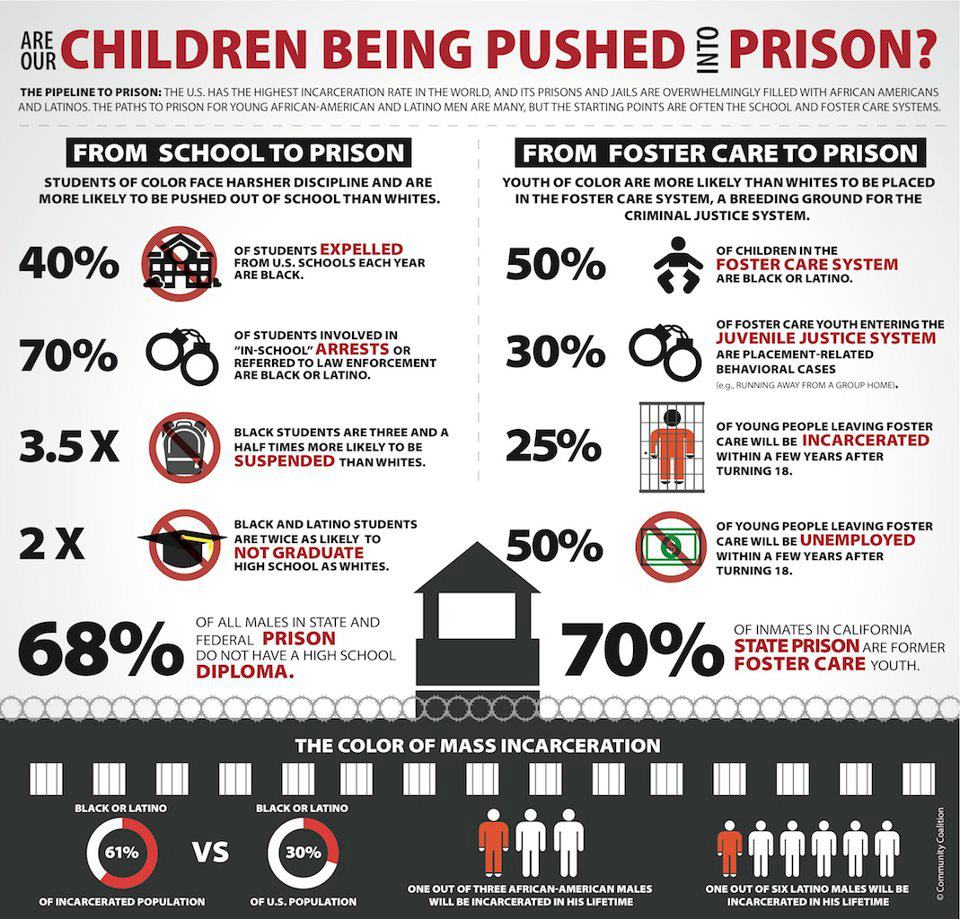
“Seattle Radical Women would like to sign on to your Points of Unity statement. We are in solidarity with your opposition to the criminalization of youth, especially youth of color. We support the effort to see that money from the King County ‘Children and Family Justice’ levy be used for youth, not against them. We support your initiative to reduce youth incarceration, in favor of providing desperately needed social services to them and their families. We also oppose the detention of anyone, especially young people, on the basis of their immigration status.
We view the racism of the entire legal system as one of the strongest proofs that capitalism is irredeemable and urgently needs to be replaced by a system run by the people for people, not by the wealthy for profit.”
Thanks to Radical Women for all your work.


We’re very happy to announce that Occupy Chaplains Seattle and Sherwood Coöperative have signed onto the Points of Unity!
Occupy Chaplains Seattle is “a Seattle-based interfaith movement supporting the Occupy movement in the Seattle area,” with the goal of being “a faith based voice in the Puget Sound region, echoing the calls for economic and social justices as expressed by Occupy Wall Street…support[ing] the spiritual well-being and peaceful protest of the Occupy Movement in and around the Seattle area… [and] bridge[ing] the faith communities and Occupy Seattle.”
Sherwood Coöperative is a housing collective and intentional community located in Seattle’s University District since the 1970s, currently home to 16 people and 6 chickens. It is a member of North American Students of Coöperation (NASCO) and the Evergreen Land Trust (ELT). Part of Sherwood’s Mission Statement reads, “to live in and support a coöperative house is to make a conscious and conscientious choice for community in a society that moves continually toward isolation and fragmentation”−mass incarceration as promoted by the prison industrial complex is an agonizing example of this “isolation and fragmentation,” and for this reason and others the members of Sherwood decided to sign on to the Points of Unity.
We’re so excited that Tadaima has signed on to the Points of Unity! Tadaima is “a Seattle-based collective that approaches social justice organizing from a Japanese perspective. [Tadaima] understands [its] work through a radical/progressive/liberatory/intersectional model of oppression.”

We’re excited that Dyke Community Action has signed on to the Points of Unity! DCA describes their group as:
We are a group of lesbians who have been working together in Seattle since 1988. Though much of our focus is on lesbian and women’s rights, we also consider it vital to fight other oppressions including racism, class injustice, anti-semitism against Arabs and Jews, ableism, and fat oppression. We strive to make our events accessible to disabled and low-income persons.
We see making connections and building coalitions between different groups of people as an important part of creating social justice. We have worked to bring up local and global issues within the lesbian community and to bring up lesbian issues in broader coalitions. As we work together and learn about each other, we can better unite as allies in our individual struggles.
An important part of the work we have done is to educate ourselves and present forums to share information. We have hosted movie and discussion series featuring such topics as the racist murder of Texan James Byrd, the anti-psychiatry movement, Rom (Gypsy) people, sex trafficking, the lives of lesbians in Singapore, Russia, and Israel, and much more. We send the money raised from these events to local, national, and international groups whose work we support.
We have worked in coalition to build support for the 1999 Seattle protests against the WTO. We have worked with other queer women on the Dyke March, as well as helping organize anti-war marches and International Women’s Day celebrations. DCA can be reached at dykeactivist at gmail dot com.


Thanks to Rose Ernst for publishing a great op-ed in Real Change about the County’s plans and why they are racist, bad for youth and bad for the County.
Thanks to Community to Community Development for signing on to the Points of Unity! Community to Community Development works to
We’re so inspired by their work for food justice and migrant justice!
Here are more awesome postcards people have been sending back to us:


We’re so excited that API Chaya has signed on to the Points of Unity! API Chaya works to end systemic oppression with a focus on organizing around and providing services for survivors of domestic violence and sexual assault in Asian & Pacific Islander and South Asian communities and survivors of human trafficking from all communities/backgrounds. API Chaya’s sign on means a great deal to us because one of the false rationales of growing and maintaining punishment systems is to support victims of sexual and domestic violence. But we know that prisons and jails are institutions that actually perpetrate sexual and gender violence, and that court processes and punishment fail to help survivors heal or prevent further violence. Stopping jail building and the expansion of punishment systems is key to stopping violence in our communities.
If you’re interested in learning more about how anti-violence activists have analyzed the problems with criminalization, here are some resources:
The Critical Resistance-INCITE! Statement: A ground-breaking statement from a leading prison abolition organization and a leading anti-violence organization talking about how anti-violence work and anti-prison work are connected.
The Color of Violence (ed. INCITE!): An anthology full of articles by activists about why and how criminalization fails to solve gender and sexual violence and what people are doing to actually get to the root causes of this violence and eliminate it.
Toward Transformative Justice by GenerationFIVE: An in-depth look at why and how criminalization fails to get to the root causes and address child sexual abuse, and how transformative justice can be used to build safety.
And here’s an awesome graphic about Transformative Justice from GenerationFIVE:

 CLOSE THE YOUTH JAIL NOW!